
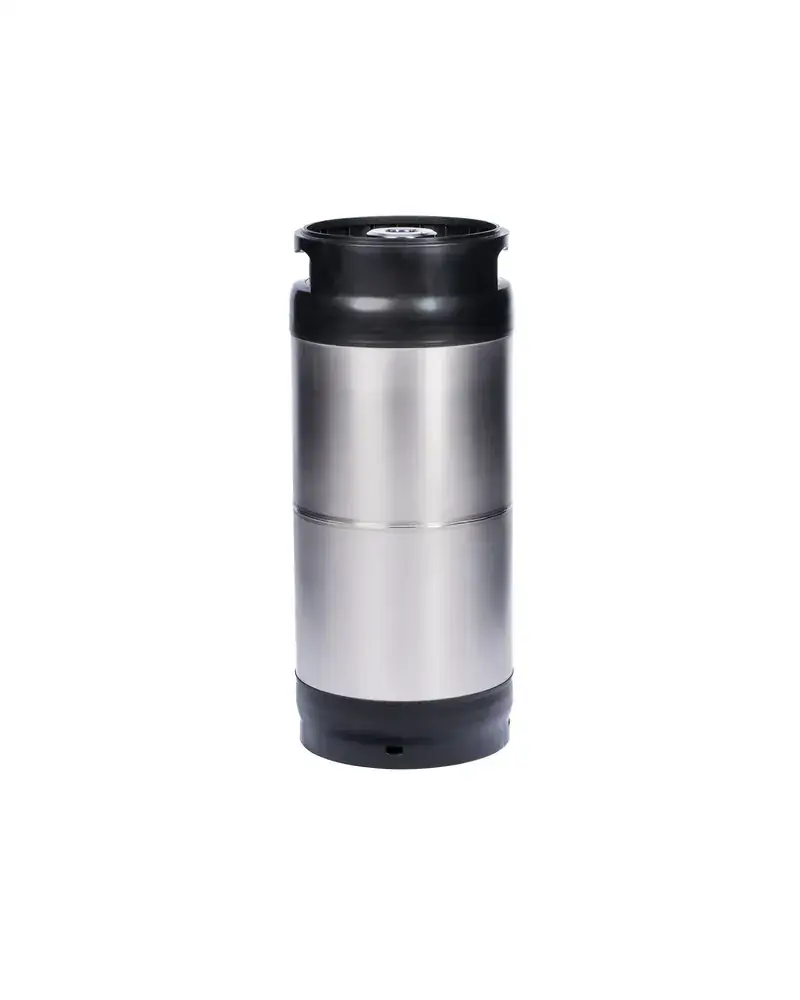
A different kind of damage
On a polyurethane-jacketed keg the stainless steel is rarely the problem. What breaks is the jacket: a handle snaps off, a piece of the top chime is missing, the polyurethane cracks where the keg has been tipped onto its edge for years.
That is annoying, because measured by its stainless steel such a keg is perfectly sound. It is sorted out all the same – not because it leaks, but because it can no longer be gripped and stacked safely.
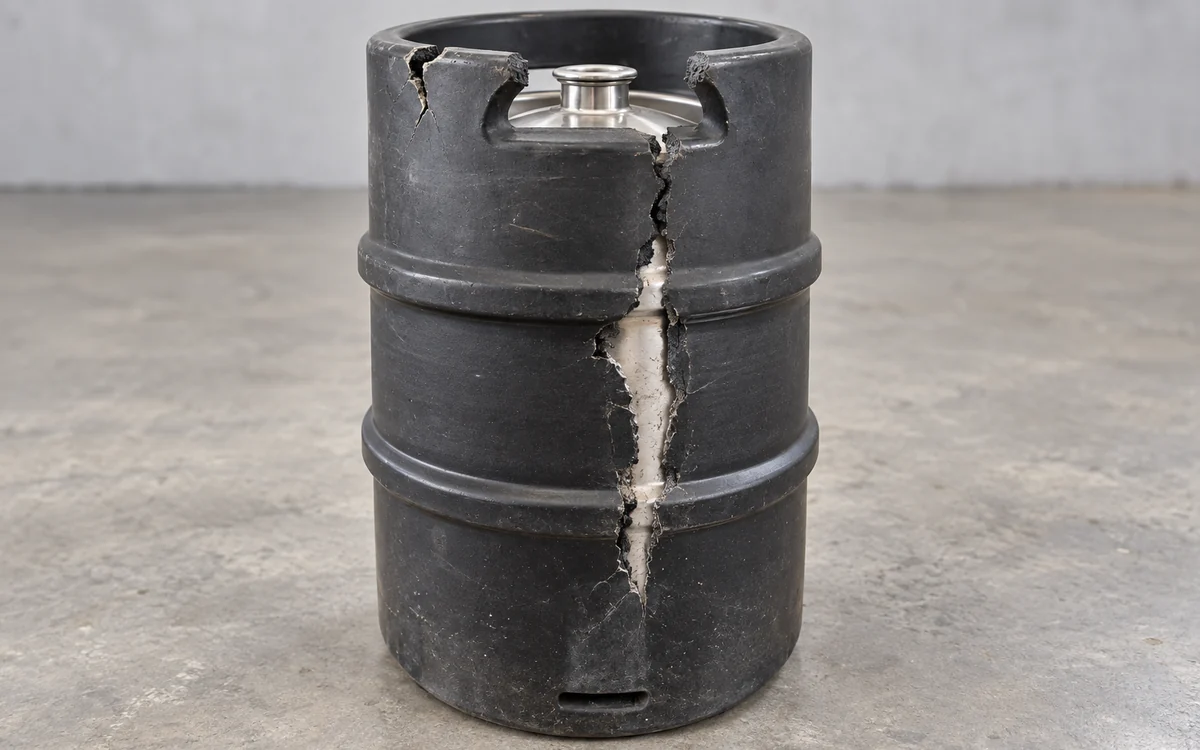
The vessel is intact, the packaging around it is not.That is exactly what this process is for.
How we repair it
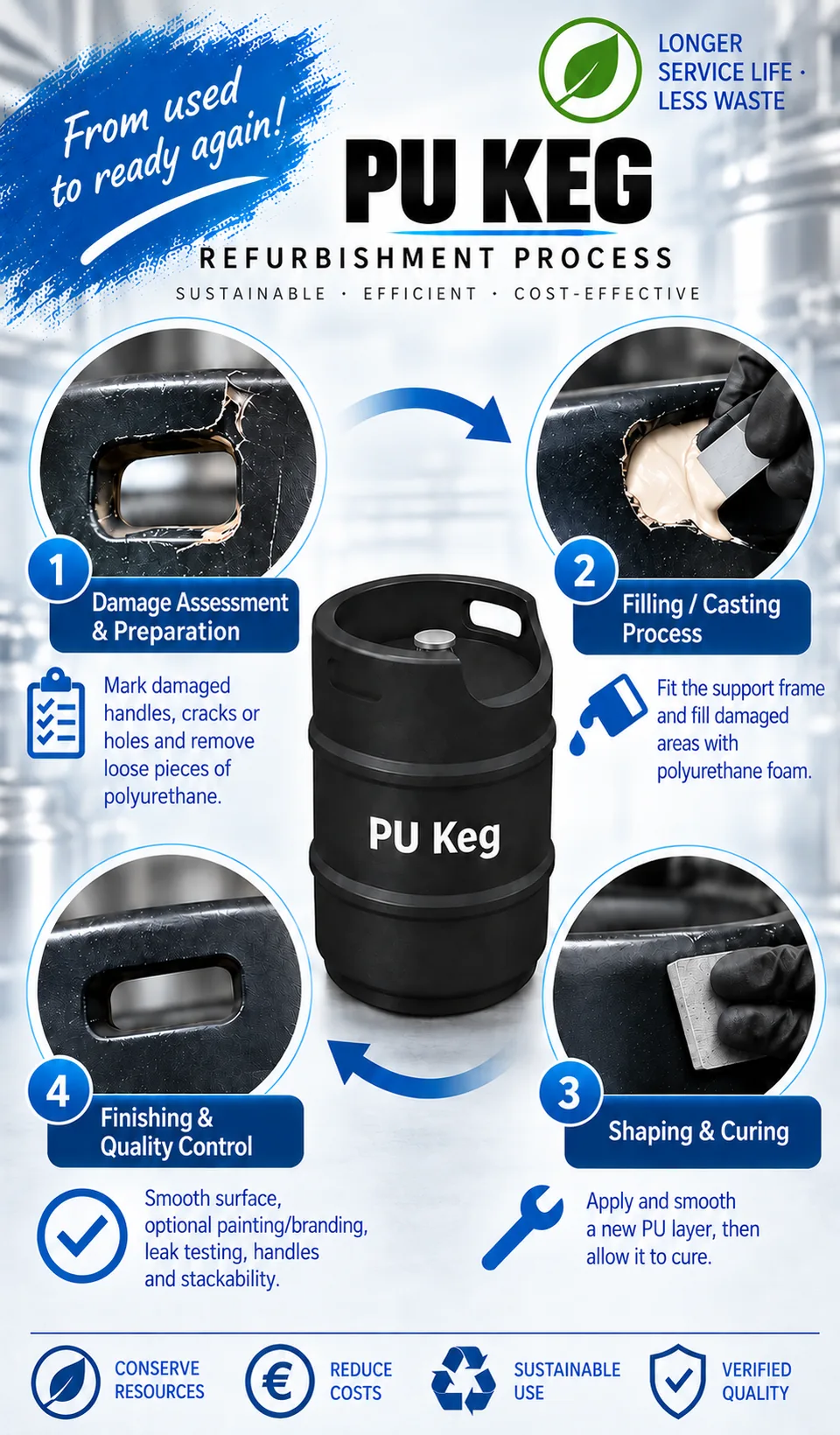
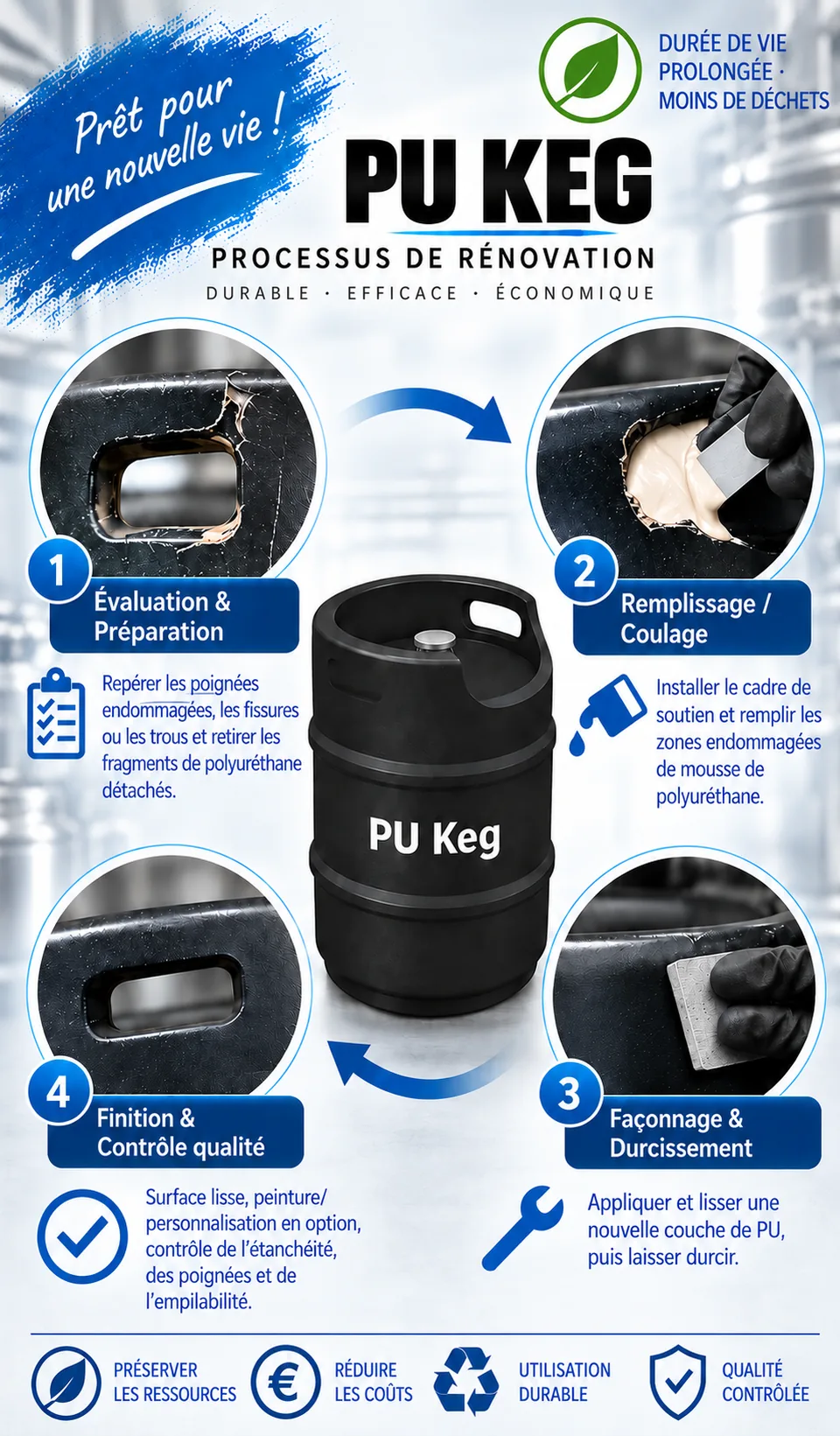
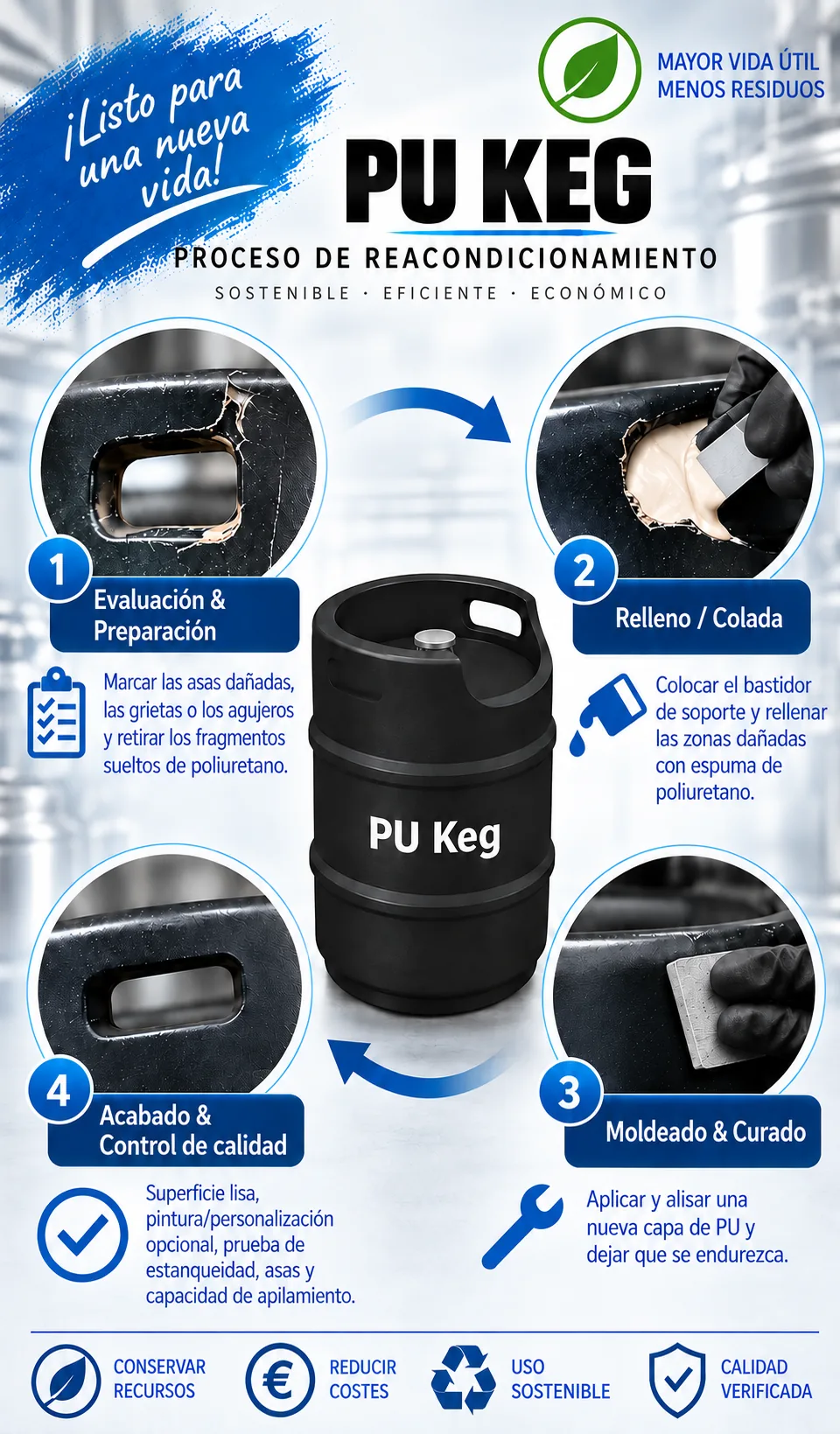
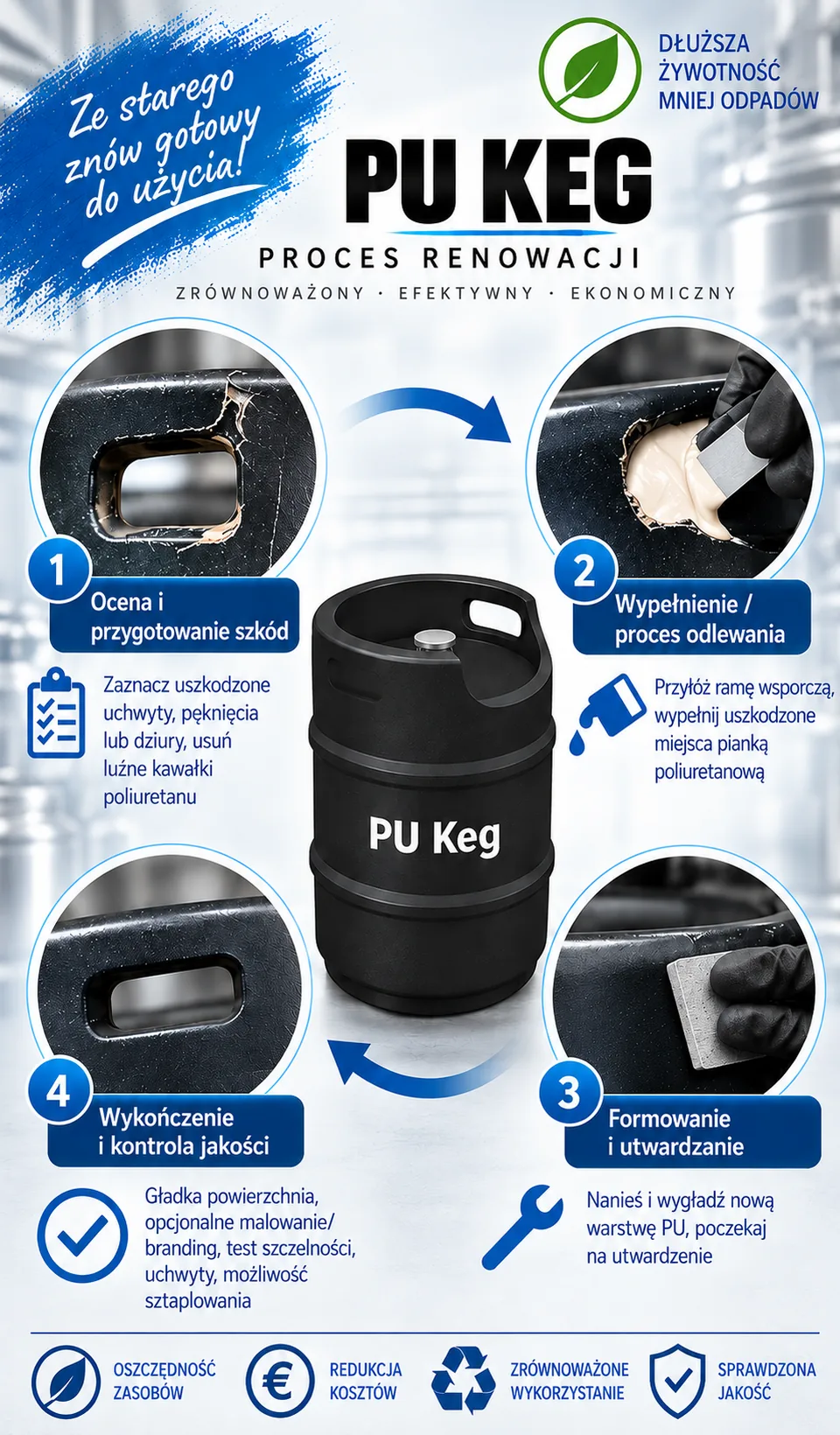
Assessment and stripping down
Every keg is inspected and the damage recorded: jacket, handles, top and bottom chime. Loose fragments are removed so that the new material bonds cleanly.
Casting the jacket back in
Cracked or missing sections of the jacket are filled with polyurethane foam and bonded. Once cured, the area carries load again.
Renewing handles and chimes
Damaged handles are replaced with new polyurethane parts. If a top or bottom chime is too badly damaged, we swap it for a new one outright.
Finish and quality control
The surface is treated and, on request, repainted or branded. The keg then goes through the same leak and function test as any other.
Polishing the jacket takes the old lettering off with it. Water runs throughout, so the grinding dust is bound at once instead of going into the air.
What is worth doing at the same time
If a keg is already stripped down on the bench, two further steps cost little: an RFID transponder that sits under the jacket and stays invisible from the outside, or a full rebranding. Ordering both separately costs more than ordering them together.
Limits, and one open question
Where we advise against it. If the jacket is destroyed over a large area – not one handle, but half the chime – the repair costs more than a replacement keg from stock. We say so rather than doing the job anyway.
What happens at end of life we do not know precisely. Polyurethane-jacketed kegs are a composite of stainless steel and plastic. According to the Bundesvereinigung Deutscher Stahlrecycling- und Entsorgungsunternehmen, the shredder is the process that separates composite materials – so for polyurethane kegs that would be the obvious route. We have no evidence for it. Neither a manufacturer nor a recycler has published anything on the subject that we could cite.
That is precisely why, on this design, repair is not only the cheaper decision but also the cleaner one: it defers a question to which there is currently no solid answer.
How many are there, and what is missing?
A few photos of the damage are enough for a first assessment. For larger batches we collect.