A keg is an advertising medium that lasts four decades
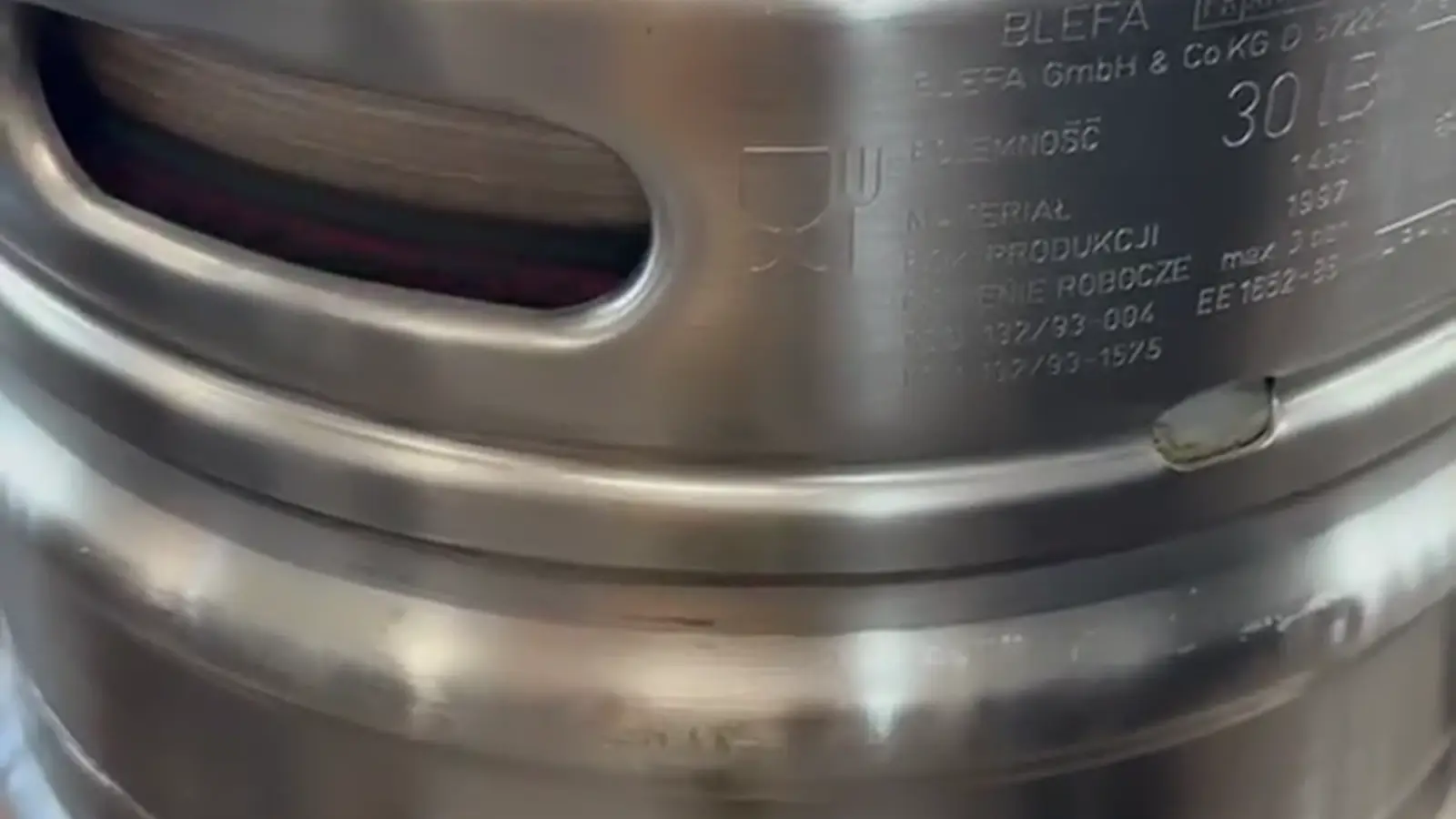
Hardly any object in a brewery is seen so often and designed so rarely. The keg stands in the cellar of a pub, it stands in the yard, it stands on the trailer. Anyone who sees it there with a faded logo from before the last change of name draws their own conclusions.
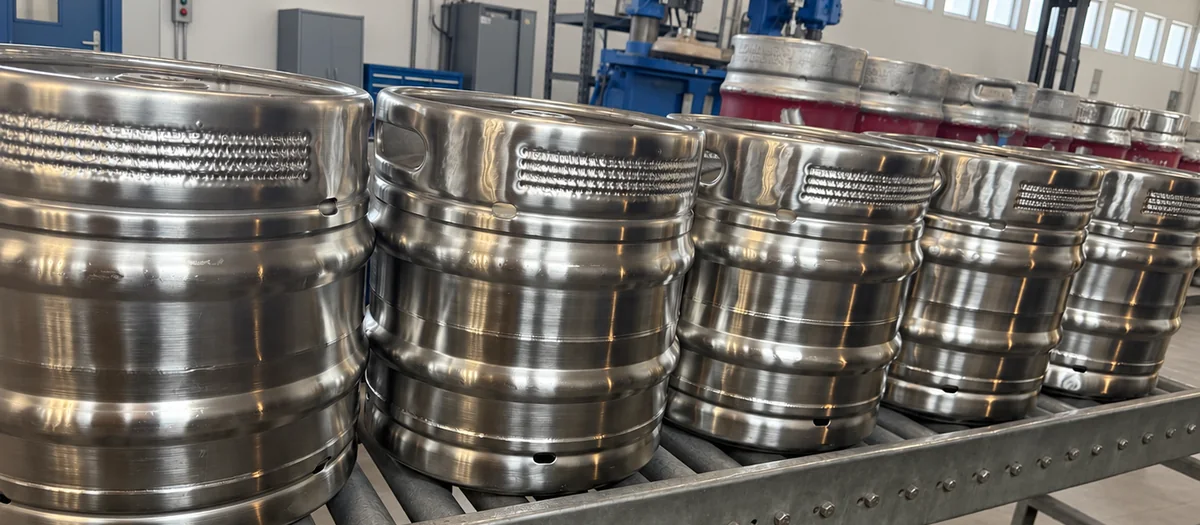
Then there is the commercial side. Instead of buying new kegs after a change of company name, a takeover or a brand relaunch, the existing fleet can be reworked. That costs a fraction and saves the entire material input of a new purchase.
A new logo does not need new kegs.It needs a clean surface and a process that lasts thirty years.
Five steps
Preparation and cleaning
The keg is prepared and the old marking removed. This is the step that decides the result – on a badly prepared surface even the best engraving comes out uneven.
Surface treatment
Polishing or satin finishing, depending on how the result is meant to look. Polished looks more upmarket, satin hides signs of use for longer.
Branding
Electrolytic engraving, screen printing or coloured embossing. Engraving is permanent and can do greyscale, screen printing can do colour, embossing survives anything. Which one fits depends on the artwork.
Colour scheme
Rings, bands or colour elements in your house colours, so that the fleet is recognisable from twenty metres away and not only once you are standing in front of it.
Quality control
Every step is checked before the next one starts. A keg whose engraving is not sitting right is not polished, it goes back to preparation.
The de-embossing machine
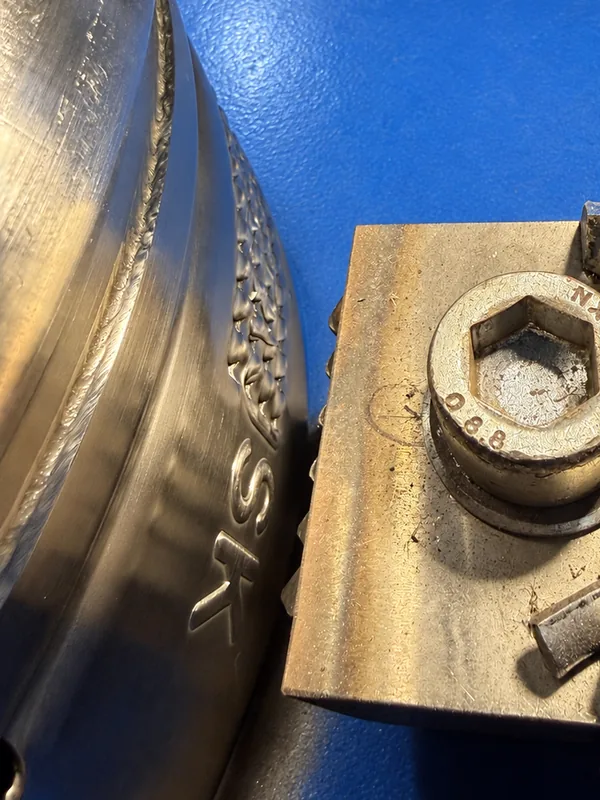
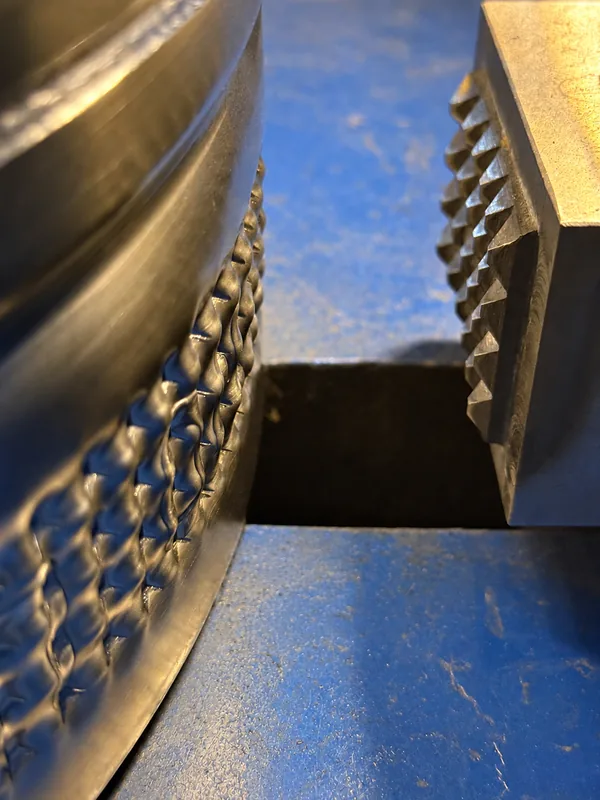
An embossed brewery name cannot be ground off. It sits in the metal as a deformation, not as a layer on top – grind it away and you take wall thickness with it. So it is over-embossed instead: a toothed tool presses an even pattern into the ring, and the old lettering disappears underneath. The area is then neutral and the keg is free for new marking.
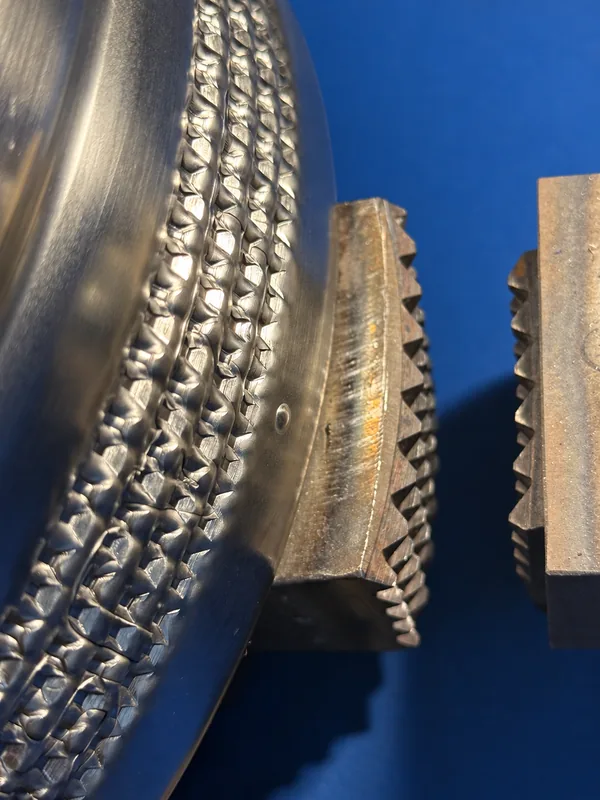
We only do this on kegs where ownership has been established. Why that is not a formality is set out in the next section.
The moment when it costs least
Rebranding as part of a complete overhaul costs considerably less than rebranding as a job of its own. Preparing the surface is the most laborious part, and during reconditioning it happens anyway. Anyone planning a change of company name should therefore tie it in with the next reconditioning cycle.
What we do not do
We only remove other companies' logos when ownership has been clarified
Removing a brewery marking is a routine step technically and anything but routine legally. A keg carrying a legible marking from another brewery is that brewery's property, no matter who currently has it standing in their yard. Anyone who has such a marking removed turns a keg that can be traced into one that cannot.
We therefore only work on kegs that belong to you or that belong to us. Where a mixed stock contains kegs marked by other companies, we sort them out and settle who they belong to before anything is neutralised. That costs a few extra days and spares everyone involved trouble that cannot be undone afterwards.
If someone else's kegs are standing on your premises and you do not know what to do with them: the technical article on this describes what you may do and what you may not. As a rule we can take them back.
Change of company name coming up?
Send us your logo and the quantity. You will get a matching quotation for reconditioning and rebranding – tailored to what works best technically with your stock.