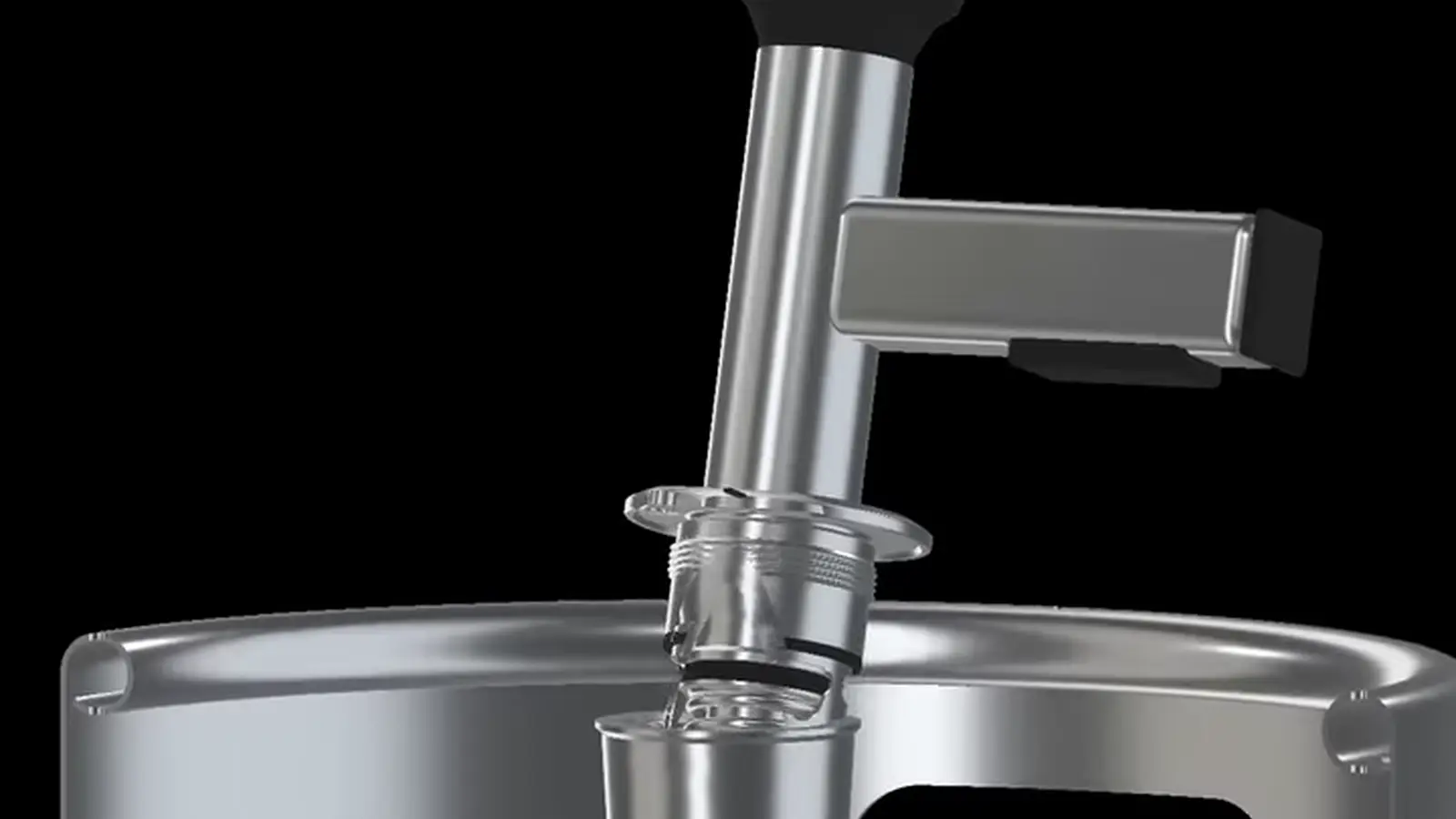
What the safety catch actually is
A spear sits in the neck of the keg and holds the operating pressure. As long as it is screwed in, the thread holds. It gets interesting the moment somebody starts to unscrew it – with pressure still in the keg.
That is exactly what the safety catch is for: a safety hook that grips behind the neck as soon as the spear comes loose. The spear can then no longer rise out of the neck; instead the pressure escapes past the seal in a controlled way. For full removal the hook has to be released deliberately – on the flat spear (A-type) family with an assembly gun.
What the hook achieves
Two things, and both are the same mechanism: while the vessel is still under pressure, the spear cannot leave the neck. And without the right special tool it cannot be removed either. Protection against the accident and protection against unauthorised removal coincide here.
The three designs side by side
| Design | What holds the spear | Removal |
|---|---|---|
| without safety catch | the thread alone | unscrew it – after the last thread turn nothing holds it |
| with safety catch | thread, plus a safety hook behind the neck | release the hook, then unscrew – needs a special tool |
| threadless | a retaining ring in a groove in the neck | pull the ring – the ring is unusable afterwards and is replaced |
The version without a safety catch is no longer manufactured. It keeps running on the second-hand market, and in considerable numbers – a keg lasts thirty years, a spear often just as long if nobody touches it.
How the safety catch works mechanically
The two types solve the same task differently. And both need their own tool for it – that is not convenience, it is the design.
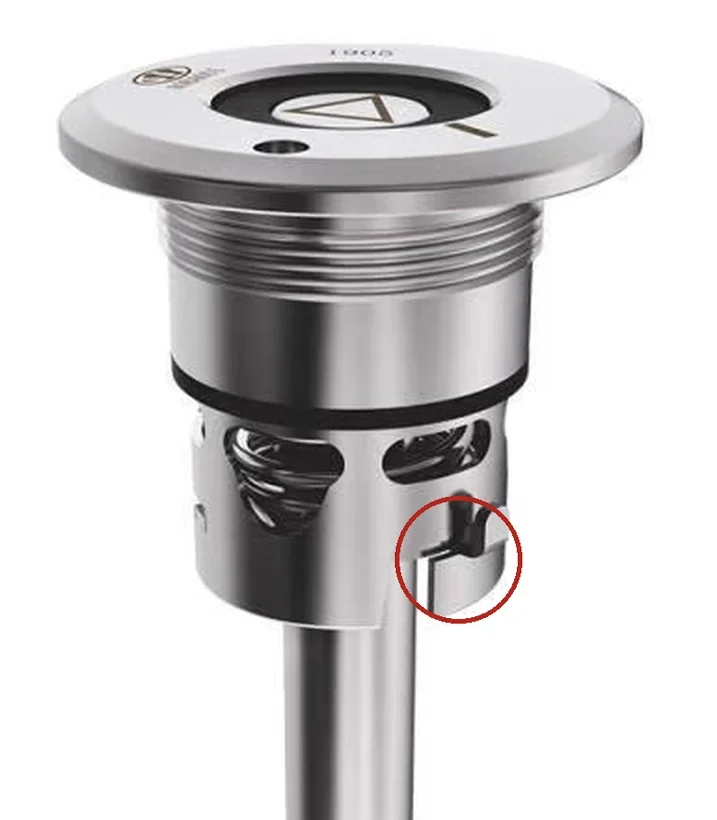
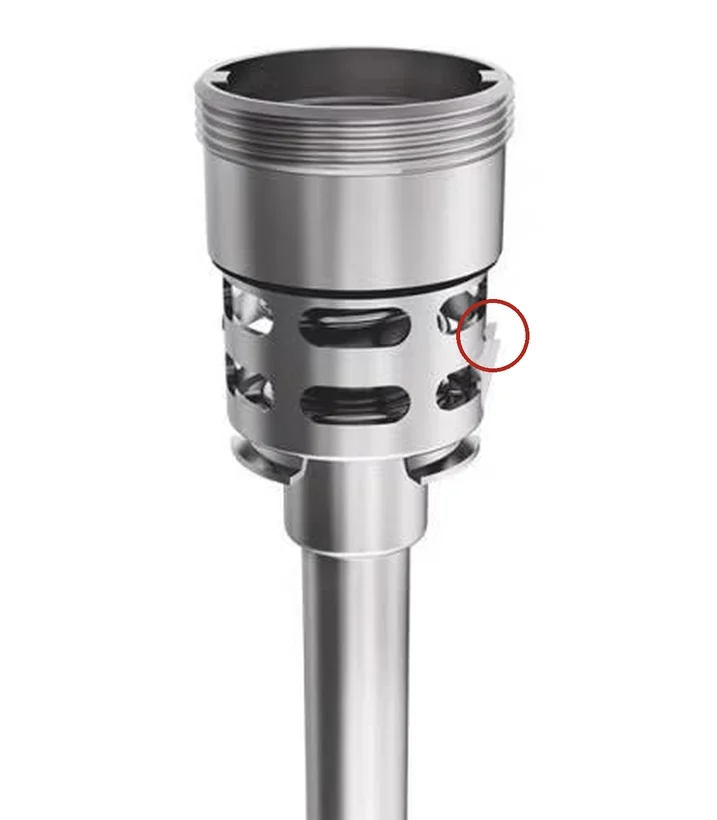
On a spear without a safety feature exactly this protrusion is missing – otherwise the part looks the same.
Flat spear type A
The EU Sankey (S-type) holds the plate welded to the down tube by means of three catches. One of these catches is extended and carries the upward-bent tab. If somebody unscrews the spear, it rises, and the tab comes up against the sealing face of the neck from below. The part gets no further. If there is still pressure in the keg, it escapes past the seal instead of shooting the spear upwards.
For removal, the assembly gun grips around the upper collar of the down tube, presses the seal downwards and engages on the collar. That holds the down tube fast. Only then can the head be turned about 25 degrees against the down tube; the catches run out from under the plate, the EU Sankey (S-type) comes free and the safety tab leaves its position. No tool, no turn; no turn, no removal – that is the point of the design.
EU Sankey spear type S
Here two small hooks stand forward and grip in the neck. The matching tool goes in centrally and presses a tongue down; via the mechanism, both hooks retract. Only with the hooks retracted does the neck release the body. The gun for type A is no help here, and the same the other way round: the tool is tied to the design.
Identifying it – and why that is not enough
From the outside, on the installed spear, there are clues:
- a star- or triangle-shaped laser mark on the body of flat spears (A-type) with a safety catch,
- the type designation, provided it is legible,
- on the EU Sankey spear (S-type) the lug marking: no mark means the older version without a safety hook; III or R means a hook is present but not fixed to the body; S means the hook is welded on.
The hook itself cannot be seen. It sits inside and only becomes visible once the spear is out.
Treat every spear as if it had no safety catch
A marking on the body says what was fitted at the factory. It does not say what is still there today. A safety hook can be cut off – and that happens, because it gets in the way during removal and not everyone has the right tool.
A spear with a star on the body and no hook inside looks like a safety spear and behaves like one without. Rely on the marking and you are relying on the care of the last person who worked on it. That is our workshop experience, and it is the reason for the rule further down.
Why this is not a theoretical risk
A spear is a metal part of a few hundred grams in the neck of a vessel holding a compressed gas. If the connection lets go abruptly, it becomes a projectile – at head height, because you stand over the keg while unscrewing.
A patent specification from 1991 whose subject is precisely this safety catch describes the problem unambiguously in its background section:
“There is a danger of the down tube valve being blown out of the keg with considerable force by the keg gas pressure. This could, of course, seriously injure the person concerned.”
And on the cause: the residual pressure is to be released before removal – “if, by human error, the step of gas evacuation is omitted”, there is a danger of the spear being thrown out. So the safety catch was not invented because somebody might be careless, but because human error has to be planned for as the normal case.
An American keg safety guide puts it this way for the threadless system: before the retaining ring is pulled, the pressure must be released, “to prevent the D-valve from becoming a projectile and seriously hurting or even killing an operator”. The ring holds the spear in the neck at an internal pressure from about 30 psi – around two bar.
How much energy is involved
The most vivid figure on this comes from occupational safety. At the same pressure and volume, the stored strain energies of a gas pressure test with air and a hydraulic pressure test with water stand at roughly 14,000 to 1. A keg full of beer releases little energy if it fails. A keg with a gas cushion is something else entirely – and an “empty” keg is exactly that: almost nothing but gas.
An empty keg is not pressure-free
This is where most near-misses come from. “Empty” means dispensed, not depressurised. Residual beer and a gas cushion stay in the keg, and both keep working:
- Temperature. If it rises, the pressure rises. A keg standing in the sun in the yard has more pressure at midday than it had in the cellar in the morning.
- Secondary fermentation. Residual beer with yeast keeps producing CO₂.
- Time. A keg that was vented yesterday can be under pressure again today.
How severe this gets is shown by a damage case documented in an investigation report from TU München: at 35 °C the seal was pushed out of the spear, with an internal pressure of over 6 bar – more than twice the operating pressure the keg is designed for. That the seal gives way before the vessel fails is intended by design. It does not change the fact that this pressure was in the keg beforehand.
The rule
It is short, and it has exactly one critical point: the timing.
Vent immediately before the work
Not the day before, not “already did that earlier”. Nothing may come between venting and putting the tool on – no standing overnight, no lunch break. If the keg is set aside again afterwards, it is vented again before the next step.
At a distance and with a long aid
The decompression key exists precisely for this. Nobody stands in the discharge direction while doing it, so not over the keg. A cloth over the valve holds back whatever comes out with the gas.
Listen until nothing more comes
Do not stop after the first hiss. The gas cushion needs a moment, and with cold beer further CO₂ comes out of solution as the pressure drops.
Only then release the spear
On safety-catch versions with the right tool, not with improvisation. Cut the hook off to save yourself the tool and you have a spear without a safety catch in circulation afterwards – and the next person will not know.
And the rule that no set of instructions may leave out
Never pressurise an empty keg filled only with air – neither to test it nor to blow it out. A test pressure is applied to a filled keg, with water or another medium.
The reason is the stored energy. Water is practically incompressible: if the vessel tears, the pressure is gone at once and the contents simply flow out. Air is a loaded spring – it discharges in an instant, and sheet metal turns into projectiles. At the same pressure and the same volume, the German statutory accident insurance puts the difference at roughly 14,000 to 1. That is why the rule holds without exception, even when nothing happened last time.
The tools for it
A safety catch that holds cannot be released by improvisation – that is its point. There is a separate tool for each spear family.
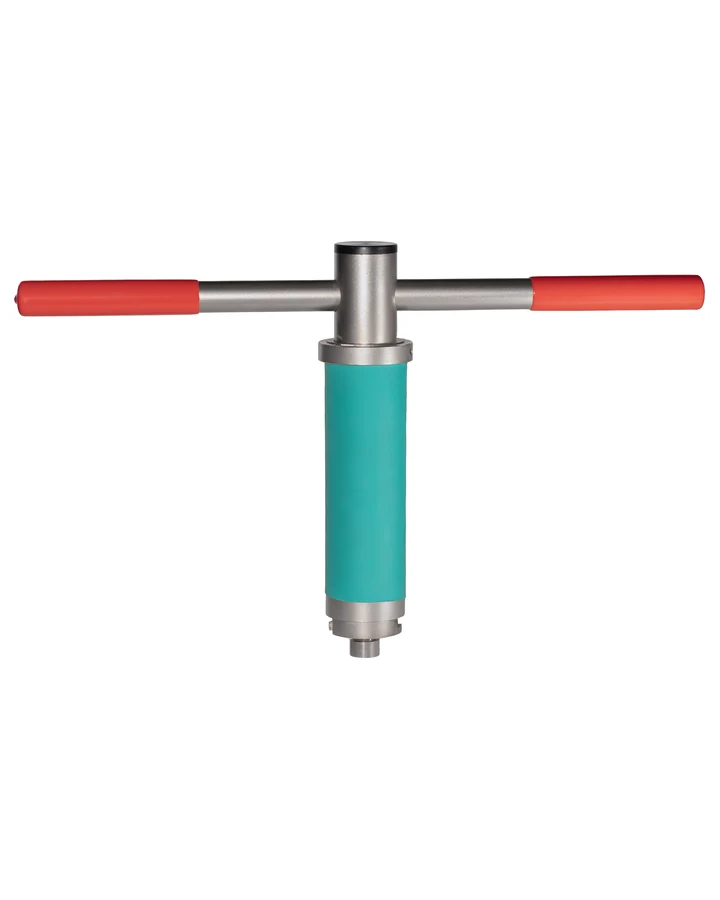
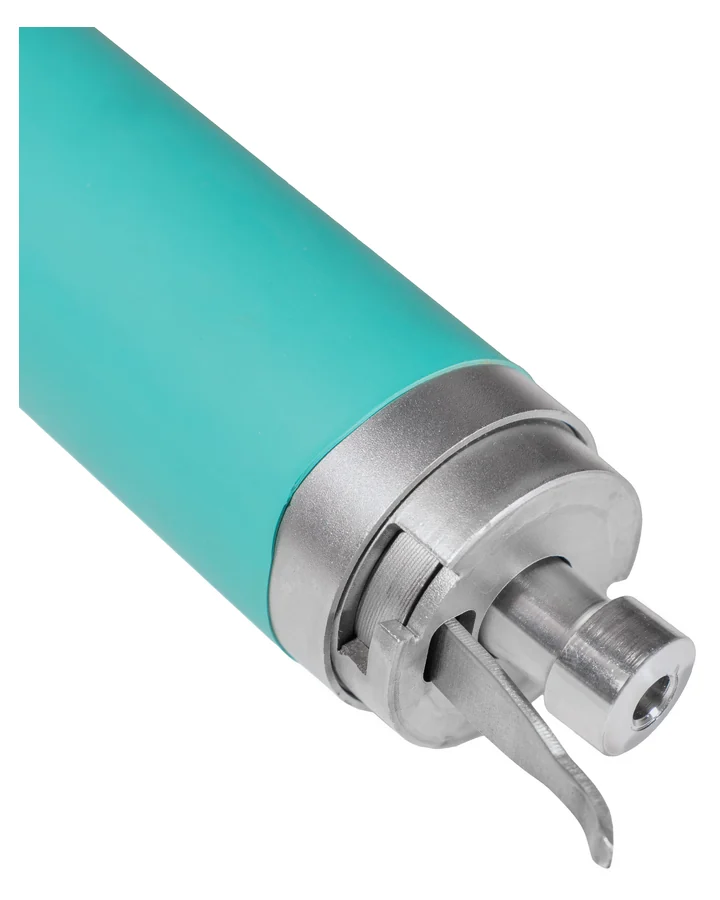
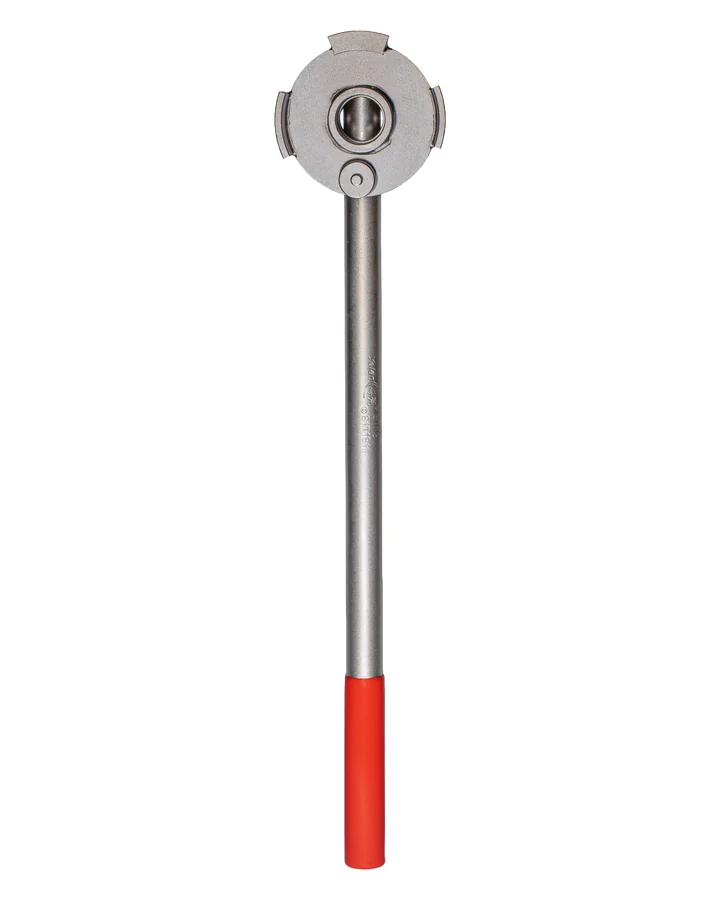
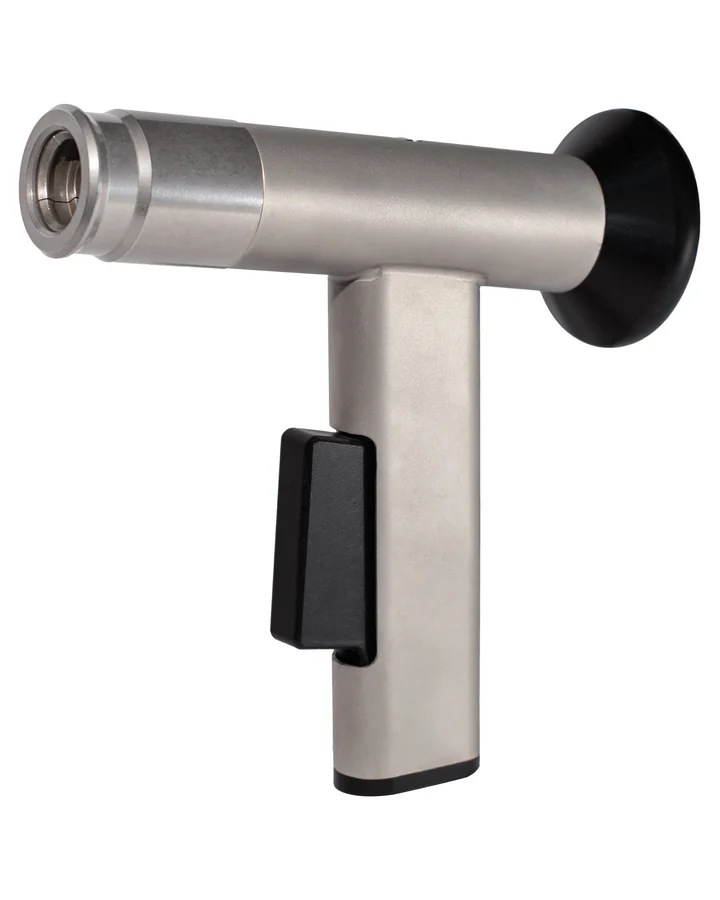
On type S the mechanism sits in the working end: a nose extends and pushes the safety hook back. Without that step the spear cannot be unscrewed – and that is exactly the intention.
On type A two tools share the work. The decompression key releases the residual pressure. The assembly gun releases the safety hook so that the spear can leave the neck.
Not for tightening
These tools are built for opening. Tightening calls for a matching screw adapter and a torque wrench – nothing else.
The torque depends on the spear type; the manufacturer's specification is what counts. Too loose means leaking. Too tight means a damaged neck thread, and that is grounds for scrapping, or a crushed body seal that only shows up in service. We carry matching adapters in our spare parts range.
What this means for your own stock
Spears without a safety catch are no reason to scrap the keg. They are a reason to replace the spear – and that is a parts swap, not work on the keg, as long as the neck carries the standard thread of 2 inches and 14 threads per inch.
If you are overhauling anyway, it gets done along the way: in the spear service the spear is checked or replaced, and in a system change the new one goes onto the same neck. What remains is a stock question: do you know how many kegs in your circulation still run without a safety catch?
How we work
In refurbishment we treat every incoming keg as if it were under pressure and as if its spear had no safety catch – regardless of marking, type and what the delivery note says. That costs a few seconds per keg, and it is the reason those seconds are not up for discussion.
Read on
Why a keg is legally not pressure equipment, and which inspection duty falls on the operator instead: Is a keg pressure equipment?