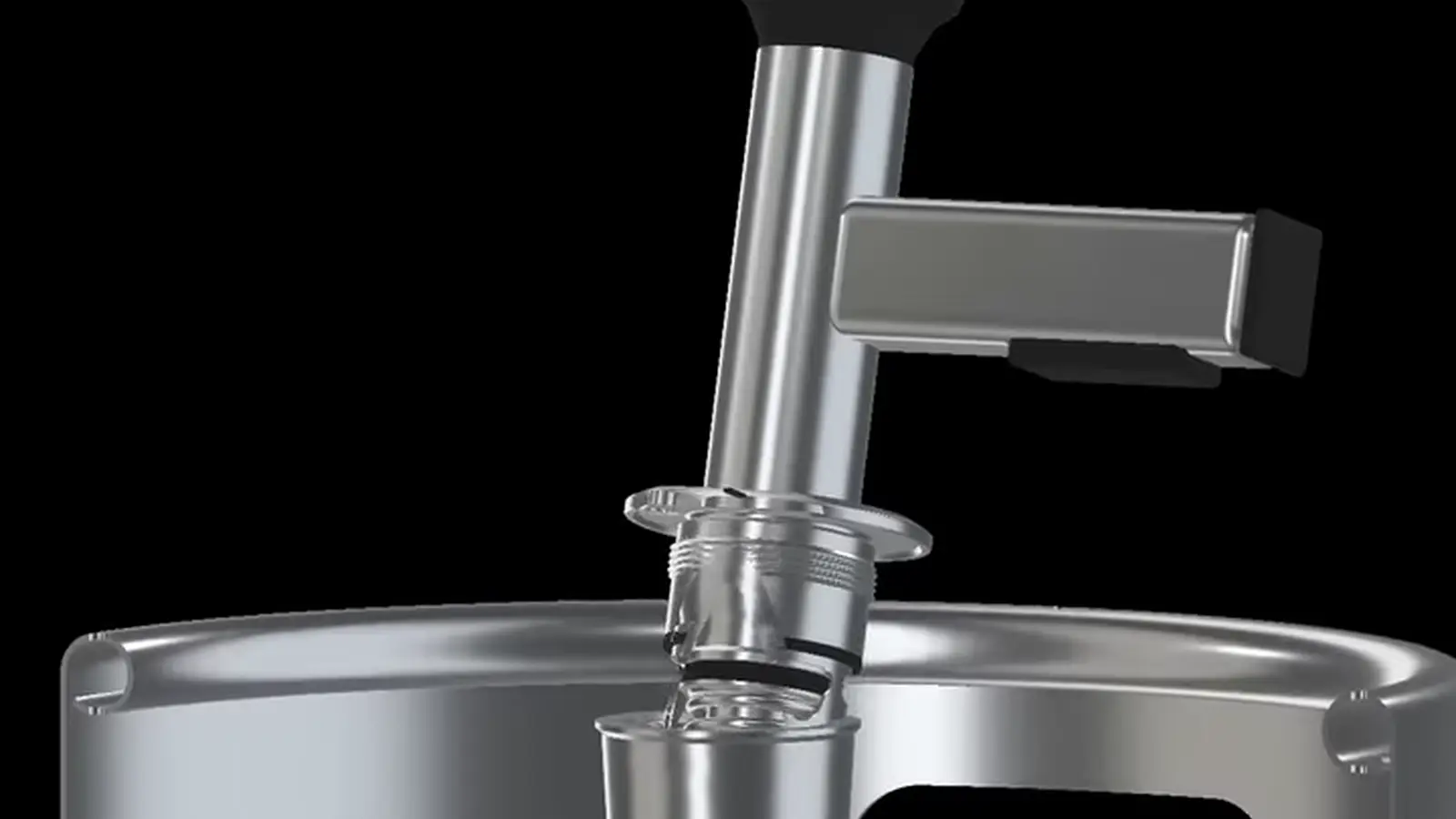

The diameter decides, not the capacity
Anyone who wants to identify a keg measures the wrong thing first. The obvious question is “How much goes in?”, the useful one is “How wide is it?”. Because the capacity sits in the height, the keg type in the diameter – and only the keg type decides what fits into your cold room, what can be stacked and which spare parts exist for it.
Three families share the European market between them.
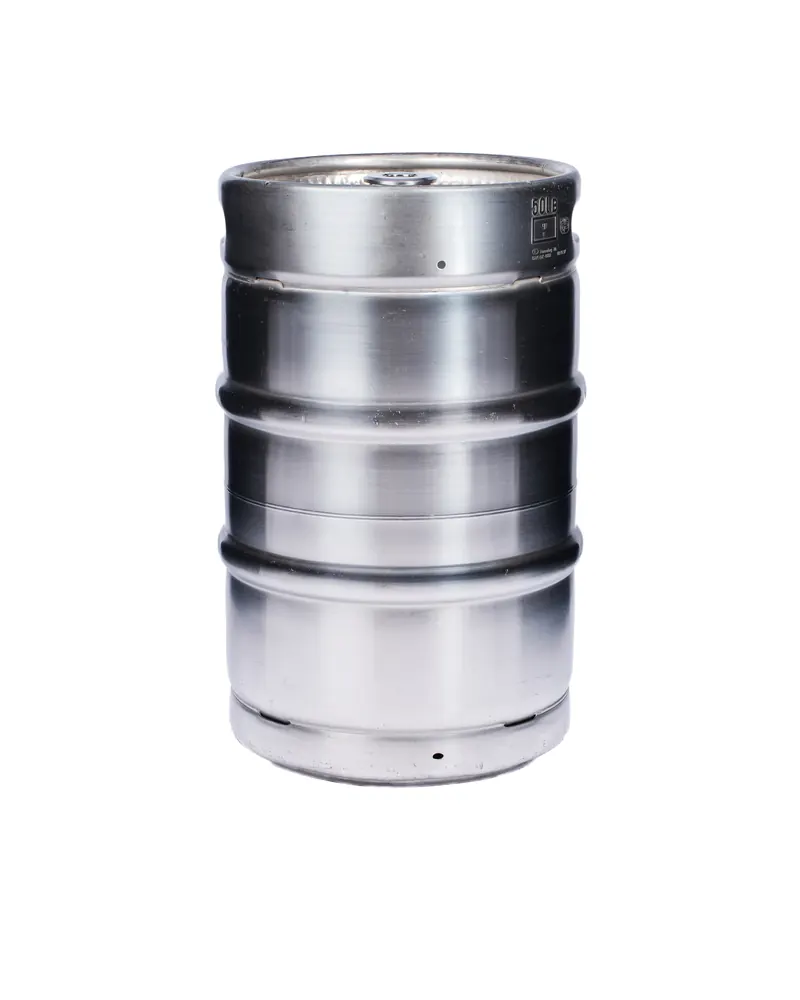
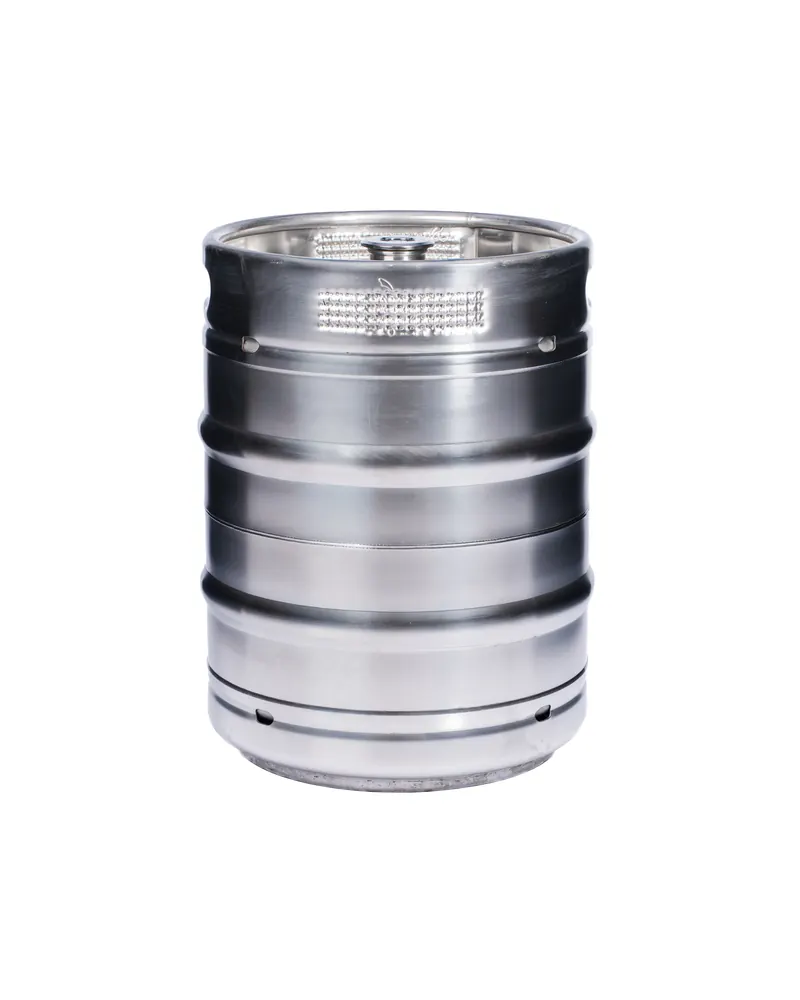
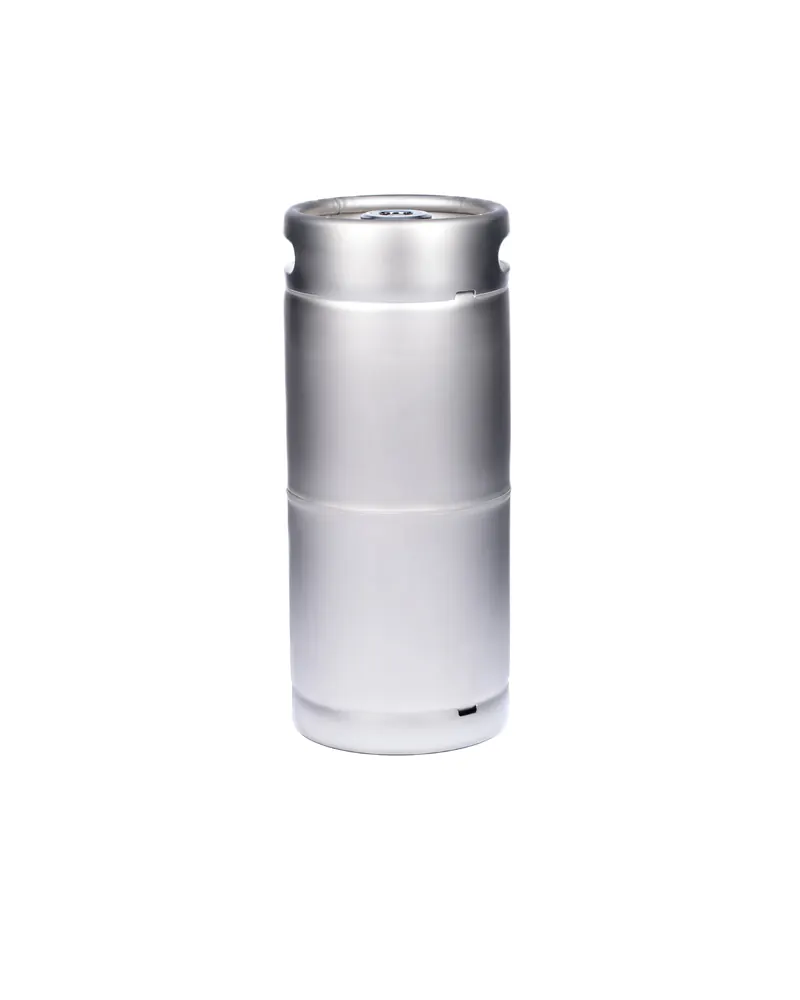
Photographs from our own stock. The images are not to a common scale – the drawing further down does that.
Two pressure classes – and why that is not DIN versus EURO
DIN 6647 has two parts. Both apply to cylindrical beverage containers up to 50 litres nominal volume, and what separates them is stated in their titles: the permissible operating gauge pressure.
| Standard | Permissible operating gauge pressure | Capacity up to |
|---|---|---|
| DIN 6647-1:2006-12 | 0.3 MPa · 3 bar | 50 l |
| DIN 6647-2:2006 | 0.7 MPa · 7 bar | 50 l |
Neither title mentions a keg shape. Under part 1 a container is designated, for example, Getränkebehälter DIN 6647-1-0,3-20 – part of the standard, pressure, volume. The shape of the keg is not part of it.
In practice that means: the DIN keg and the EURO keg sit in the same pressure class. Beer kegs of both shapes carry a stamped permissible operating gauge pressure of 3.0 to 3.5 bar. A EURO keg is not the stronger keg – it is the wider and lower one.
What the 7 bar class is for
The title of part 2 does not say. Heavily carbonated drinks are the obvious candidate; the type L soft-drink spear, rated up to 7 bar, belongs in the same range. That is our reading, not a quotation from the standard. We have not seen the full text of either standard – it has to be paid for. The stamped operating gauge pressure of 3.0 to 3.5 bar is our own workshop figure from current stock.
The dimensions, to scale
The drawing below is built from the figures, not from the photographs. Same capacity, same scale – you see at once what the diameter does to the height.
50 litres in two keg types, 20 litres in three
All figures in millimetres, overall height.
| Keg type | Ø | 20 l | 25 l | 30 l | 40 l | 50 l |
|---|---|---|---|---|---|---|
| DIN | 363 mm | 305 | 350 | 400 | – | 600 |
| EURO | 395 mm | 287 | 325 | 365 | 450 | 532 |
| SLIM | 237 mm | 560 | – | – | – | – |
| SLIM | 278 mm | 435 | 513 | 590 | – | – |
| SLIM | 309 mm | – | 475 | – | – | – |
Heights in millimetres. Operating data from our own stock; with kegs of different vintages and from different manufacturers, deviations of a few millimetres occur.
SLIM – and the one restriction
Slim kegs are popular, and the reasons are good: they fit into tight cold rooms, they are easier to carry, and for smaller dispensing volumes a 20-litre container 278 millimetres across is the handier format. In the craft scene they are therefore standard.
But there is one case in which they behave differently from a DIN or EURO keg, and it is not obvious.
Summer export: the headspace geometry, not the fill volume
An expert report by the Weihenstephan research centre of TU Munich examined a damage case in which slim kegs leaked one after another during summer export. The obvious suspicion was overfilling. It was wrong – the carbon dioxide content of the affected kegs was within the normal range.
The cause is the geometry of the headspace. In a slim, tall keg the gas cushion above the beer is smaller at the same fill volume and shaped differently than in a wide one. If the temperature rises, the expansion has less room and the pressure climbs faster. The seal gives way before any safety mechanism takes effect.
In practice this means: for dispensing in a chilled cellar, SLIM kegs are unremarkable. For unrefrigerated transport to warm regions you should know what you are doing – and if in doubt choose the wider keg type. We have recalculated the case in detail in a separate article.
What the keg type does not decide
A widespread short cut: “DIN keg, so flat spear.” That is often correct and still not a rule.
Keg type
Outside diameter, height, chime, palletising, availability of spare parts for the top and bottom chime.
Identified with a tape measure.
Spear
Which coupler fits, which probes your washing plant needs, how much opening travel is available during cleaning.
Identified by the body above the neck – flat spear type A measures 74.5 mm, triangular spear type G 70 mm. With the EU Sankey spear (S-type) there is no body above the neck at all.
The two are independent of each other. A EURO keg can carry a EU Sankey spear (S-type), a DIN keg a combi spear (M-type). The neck is the same on all common keg types: 2 inches with 14 threads per inch. That is why a keg can be converted without anything on the container being changed.
Two special designs that are often overlooked
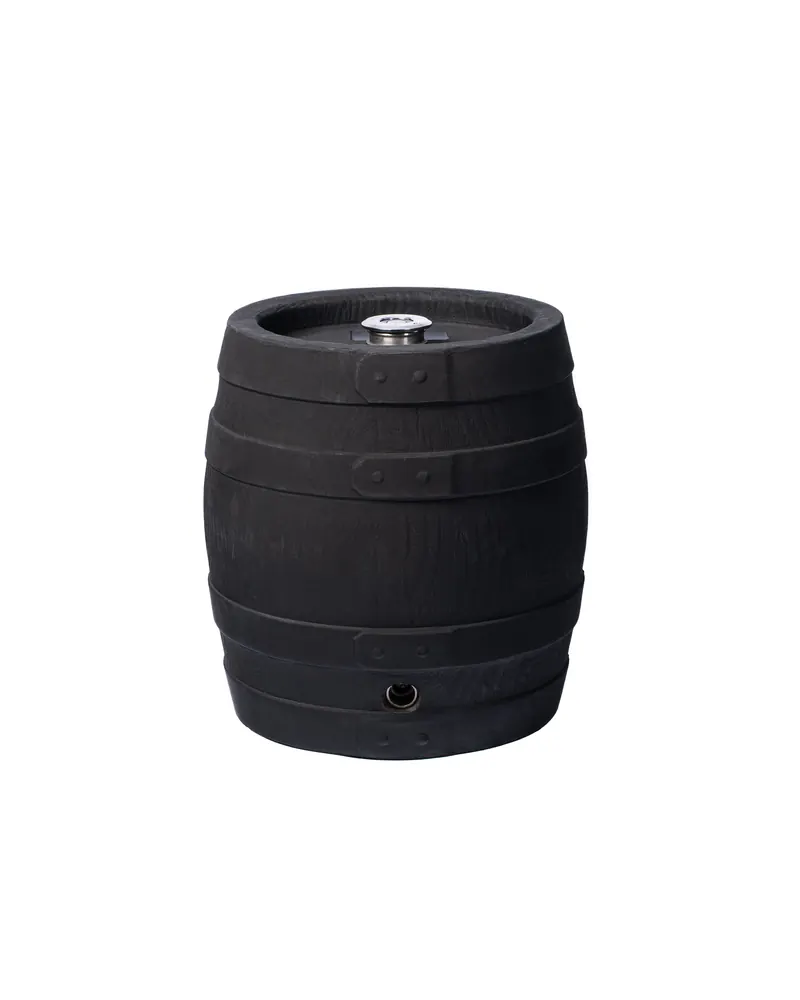
The party keg is not a keg in the narrower sense but a container for direct dispensing – with a Bavarian or Austrian tap driven in instead of a spear. It belongs to a different cycle and cannot be washed with the same plant.
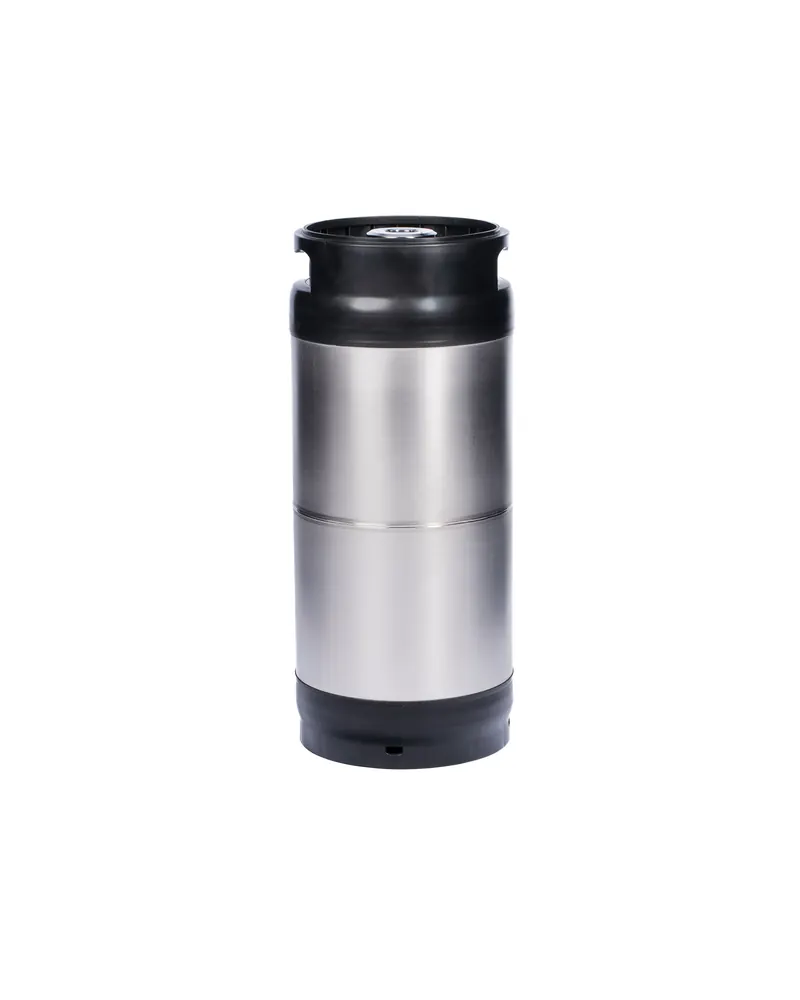
The Opti-Keg and related designs carry chime and base made of plastic. That protects against impacts and dampens the noise during handling. But it has a price that appears in no brochure: damage and leaks cannot be seen under the jacket. Anyone inspecting such kegs needs additional equipment – in practice thermography – to find leaks in the area of the safety burst point. That is the only disadvantage of the jacket for which we have evidence; all the others one hears we could not confirm.
In brief
- EURO when marketability, spare-part supply and pressure reserve count. That is the safe route.
- DIN when palletising decides – slimmer for the same capacity, but taller.
- SLIM when cold room and handling decide and the way to the tap is short and chilled.
And in all three cases: the keg type says nothing about the spear. That is a decision of its own.
Newsletter
New specialist articles as soon as they are finished
About once a month: new articles, new calculators, what is moving in standards and packaging law – and offers from our range.